
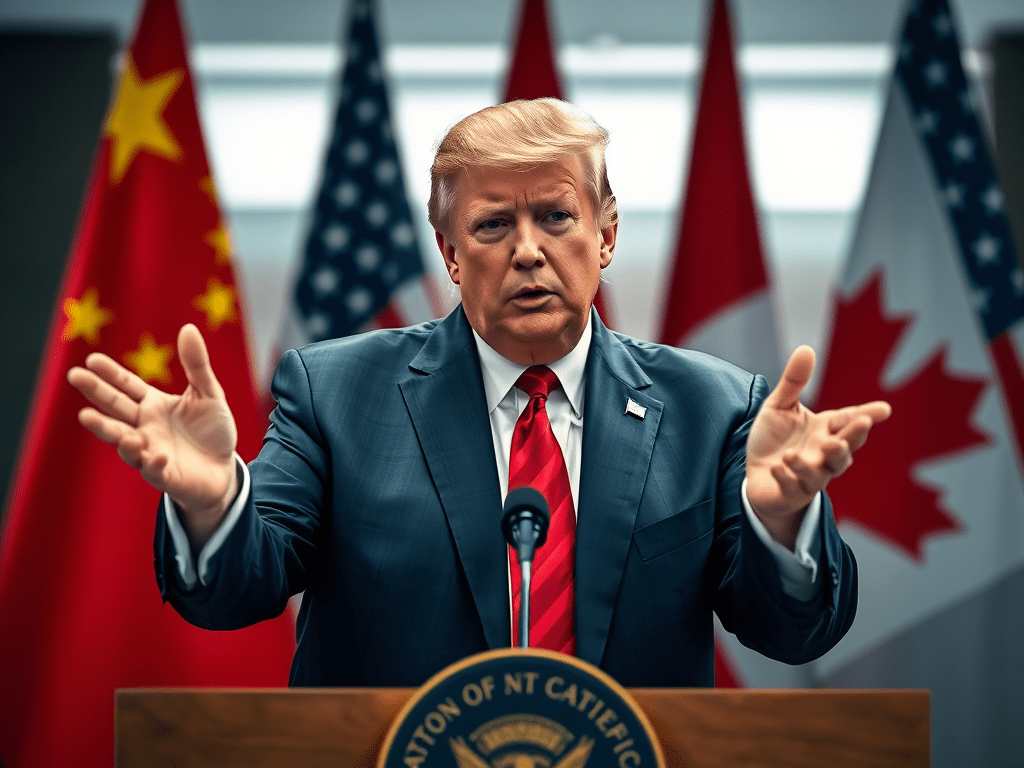
As a lifelong supporter of Donald Trump, I’ve always believed in his “America First” vision and his knack for turning bold promises into reality. His first term brought trade deals like the USMCA and a booming stock market, so I had high hopes for his second term, which began on January 20, 2025. But 100 days in, I’m struggling. The stock market has tanked my investments, tariffs are driving up prices, interest rates are squeezing my wallet, and the promised peace deals—especially to end the Ukraine-Russia war—are nowhere in sight. I know I’m not alone in feeling let down. If you’re a Trump supporter wrestling with these same concerns, let’s unpack what’s happened, why it’s tough, and whether there’s light at the end of the tunnel.
The Stock Market Rollercoaster: A Personal Hit
Like many of you, I’ve poured years into building my investments, only to watch tens of thousands of dollars vanish in the past few months. The stock market has been a wild ride since Trump took office. On April 3, 2025, the S&P 500 crashed 4.8%, its worst day since June 2020, wiping out nearly $6 trillion in value over four days. The Nasdaq took a 6% hit that same day. Tariff fears—especially on China, Canada, and Mexico—sent investors running, hammering companies like Tesla and airlines that rely on consumer confidence.
Then came a glimmer of hope. On April 9, Trump announced a 90-day pause on most tariffs (except China’s, now at 125%), and the S&P 500 soared 9.5%, its best day since 2008. The Nasdaq jumped 12%. But here’s the kicker: stocks are still hovering around their levels from Trump’s November 2024 election win. No real gains, just volatility. As someone who cheered Trump’s first-term market boom (the S&P 500 rose 68%), this chaos feels like a betrayal of his economic prowess. I get that he calls it a “period of transition,” but the losses hurt, and I’m left wondering if my portfolio will recover.
The Economy: Price Hikes and Recession Fears
The economy isn’t offering much comfort either. Trump’s tariffs—a 10% baseline on most imports, 25% on Canada and Mexico for non-USMCA goods, and 125% on China—have jacked up prices. Economists say we’re looking at a 1.4–5.1% price spike, costing families $1,900–$7,600 a year. I’m already bracing for higher grocery bills, and with 37% of U.S. footwear coming from China, even my kids’ sneakers will cost more. Retaliatory tariffs from Canada ($155 billion in U.S. goods), China (15% on coal and gas), and others threaten our farmers and manufacturers, and JPMorgan now pegs a global recession at 60% likely.
Some supporters on X claim inflation hit a 5-year low (2.1%), gas is $2.50 a gallon, and 1.2 million jobs were added. I’d love to believe it, but without hard data from the Bureau of Labor Statistics or other official sources, these feel like wishful thinking. Consumer confidence, retail sales, and business activity are all down, and Trump’s refusal to rule out a recession (before backtracking) doesn’t inspire confidence. I want the economic strength he promised, but right now, it feels like we’re stuck in neutral—or worse.
Tariffs: A Misleading Narrative
Tariffs are at the heart of my frustration, and I bet many of you feel the same. Trump sold them as a way to make countries like China pay for unfair trade, but here’s the truth: U.S. importers—think Walmart, Apple, or small retailers—pay the tariffs, not foreign governments. The $21 billion raised since January goes to the U.S. Treasury, which is great, but it’s coming out of American businesses’ pockets. Those costs get passed to us through higher prices or eat into company profits, tanking stocks. When Trump briefly slapped 100% tariffs on 57 countries before pausing most, the market chaos was unbearable.
I feel misled. The rhetoric made it sound like China was writing checks to the U.S., but instead, we’re footing the bill while hoping it pressures foreign suppliers indirectly. Trump’s team says tariffs are “medicine” to fix trade deficits and bring back manufacturing, and the 90-day pause shows he’s open to deals. Treasury Secretary Scott Bessent claims 70 countries are negotiating trade agreements, due by July 8, 2025. I’m rooting for Trump’s “Art of the Deal” to deliver, but the short-term pain is real, and the lack of results so far stings.
Interest Rates: No Relief in Sight
High interest rates are another sore spot. U.S. Treasury yields shot above 4.5% in April, up from under 4%, making mortgages, car loans, and credit card debt pricier. Trump doesn’t control the Federal Reserve, but his tariff-driven market turmoil has pushed yields higher, squeezing families like mine. There’s no clear plan to lower rates, and Fed Chair Jerome Powell hasn’t signaled cuts. I was hoping for economic policies that ease the burden, but high rates are piling on the pressure, and it feels like Trump’s team isn’t addressing it.
Peace Deals: Where’s the Progress?
Perhaps the biggest letdown is the lack of peace deals, especially Trump’s promise to end the Ukraine-Russia war “in one day.” That was a bold claim, and as a supporter, I believed he could pull it off. But 100 days in, the war rages on. Trump tried strong-arm tactics: threatening Russia with tariffs and sanctions, pausing U.S. military aid to Ukraine to force a ceasefire, and clashing with Ukrainian President Volodymyr Zelenskyy in a heated February 28 meeting. On March 14, Ukraine agreed to a 30-day ceasefire, but Russia hasn’t budged, demanding 20% of Ukraine’s territory and no NATO membership—terms Kyiv rejects.
Other efforts, like Saudi-hosted talks and Trump’s optimism about Iran’s nuclear program, haven’t produced results. A prisoner exchange freeing a Russian-American ballet dancer was a small win, but it’s not the game-changing peace deal we expected. Critics say Trump’s pressure on Ukraine strengthens Putin, and with no formal agreements signed, I’m left wondering if his diplomatic strategy is faltering. The Ukraine-Russia failure hits hard, as it was a cornerstone of his campaign.
Am I Missing Something?
I don’t want to be unfair. Trump’s taken bold steps that align with why I support him:
- Immigration: Mass deportations and defiance of federal judges show he’s serious about border security. Some claim an 80% drop in crossings, though I’m waiting for official numbers.
- Deregulation: The Department of Government Efficiency, led by Elon Musk, slashed federal jobs and 83% of USAID contracts, streamlining government.
- Tax Reform: Plans for a 15% corporate tax rate and extending the 2017 Tax Cuts and Jobs Act could spur growth.
- DEI Rollbacks: Eliminating diversity programs in the military and government resonates with many of us.
- Manufacturing: A $100 billion investment from Taiwan Semiconductor to build U.S. chip factories is a big deal.
These are wins, no question. But they don’t erase the economic pain or the unmet promises on peace and prosperity. I’m trying to see the bigger picture—Trump’s team says tariffs are leverage for trade deals, and the Ukraine ceasefire attempt shows effort. His first term proved he can negotiate, so I’m holding out hope. But right now, the results aren’t matching the rhetoric.
Am I Wrong to Be Disappointed?
No, I don’t think so. The stock market’s volatility, rising prices, high interest rates, and stalled peace talks—especially on Ukraine—fall short of what Trump promised. The tariff narrative was misleading, and the economic fallout feels personal. As supporters, we expected a strong start, not a “period of transition” with so much uncertainty. That said, Trump’s strategy bets on long-term gains: new trade deals, a manufacturing renaissance, maybe even a Ukraine breakthrough. The 90-day tariff pause and talks with 70 countries could shift the tide by July. His dealmaking track record gives me reason to stay patient.
A Call to Fellow Supporters
If you’re feeling the same disappointment, you’re not alone. Our support for Trump doesn’t mean we can’t question his moves or demand results. Let’s hold him accountable to deliver the trade deals, economic growth, and peace he promised. The next few months—especially the July tariff deadline—are make-or-break. I’m praying Trump’s “Art of the Deal” pulls through, that the stock market rebounds, and that we avoid a recession. We backed him for a stronger America, and I believe he can still get us there.
What’s your take? Are you frustrated too, or do you see wins I’m missing? Drop your thoughts below, and let’s keep pushing for the America we believe in.
Discover more from En-Joy Ministries
Subscribe to get the latest posts sent to your email.
