
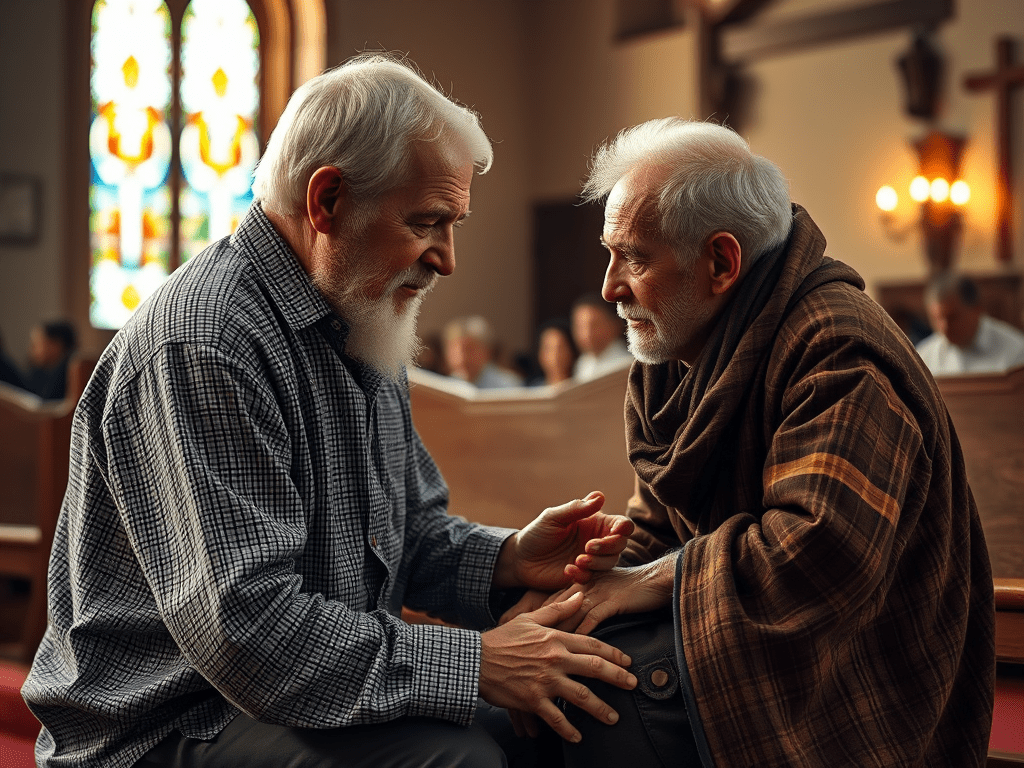
Not long ago, I preached a sermon at titled The Power of Prayer in Healing and Faith, unpacking James 5:14: “Is anyone among you sick? Let him call for the elders of the church, and let them pray over him, anointing him with oil in the name of the Lord” (ESV). I told the congregation about an elder I know—four miraculous healings under his belt: two rare cancers, a “Widow-Maker” heart attack, an emergency stomach lesion. His unshakable faith transformed how I pray. That night, as I invited people forward for healing, something struck me: some refused prayer from others, insisting I pray. At first, it puzzled me, but then it clicked—they wanted someone they trusted to embody the elder role I’d described. It hit me hard: the church isn’t a business, yet many have swapped God’s design for a corporate model. Scripture offers a blueprint—elders as spiritual overseers, deacons as practical servants. This isn’t tradition; it’s divine.
A Biblical Pattern, Not a Boardroom
The New Testament uses presbuteros (elder), episkopos (overseer), and poimen (shepherd) interchangeably for one leadership role, distinct from deacons (diakonos). Acts 14:23 set the pattern: “They appointed elders for them in every church” (ESV)—plural, spiritual leaders in every congregation. Titus 1:5-9 flows from presbuteros (v. 5) to episkopos (v. 7), listing qualifications: above reproach, one wife, godly kids, able to teach, holding firm to truth. Peter merges all three in 1 Peter 5:1-2, urging elders to shepherd and oversee willingly. These aren’t CEOs or solo pastors—they’re a called collective, shepherding God’s flock (Acts 20:28). Deacons, meanwhile, serve practical needs—Acts 6:2-4 shows them “serving tables” so leaders focus on prayer and the Word. Philippians 1:1 greets “overseers and deacons,” cementing this divine duo.
Called by God, Qualified by Grace
Elders aren’t board members elected for strategy—they’re God’s appointees. Acts 20:28 declares, “The Holy Spirit has made you overseers,” a calling echoed in Titus 1:5’s mandate to appoint them. Their qualifications (1 Timothy 3:1-7; Titus 1:6-9) demand uprightness, maturity, and discernment—men and women of faith and prayer, not just check-signers. In my sermon, I emphasized this: the sick initiate healing by calling elders they trust, whose faith releases God’s power (James 5:14-15). That elder I know? His life—marked by healings—shows what happens when overseers live this out. Contrast that with a recent church business meeting I heard about: members voted for board positions, then asked, “What do board members do?” and “What’s the role of boards, elders, deacons?” The answer—that board members weren’t elders—left folks baffled. If congregants don’t know who’d pray for them in crisis, something’s off.
The Corporate Drift: A Dangerous Shift
Having spent years in corporate America, I’ve seen churches drift from this model toward a business structure—boards focused on budgets, and pastors as CEOs. It’s a red flag. After my sermon, folks approached me: “We don’t have elders, just board members—I’d never call one to pray.” I doubt many would. A few years back, another church asked me to teach a four-month class on biblical elders and deacons because they saw the same issue. James 5:14 assumes elders are known, trusted overseers—spiritually mature, prayerful, and anointed to heal (Mark 6:13 echoes oil’s use). Corporate boards can’t fill that; they’re not designed to. This isn’t just an Assemblies of God quirk—I’ve seen it across denominations. The world’s infiltrating the church, and we’re letting it.
Countering the Critics: Elders Aren’t Pastors, Deacons Aren’t Boards
Some argue presbuteros, episkopos, and poimen mean “pastors” as a solo role, with deacons as boards. They’re half-right but miss the mark. Yes, poimen (shepherd) describes elders—Ephesians 4:11’s “shepherds and teachers” fits Titus 1:9’s teaching role—but Acts 20:17 calls multiple elders to shepherd, not one pastor-king. The singular “pastor” is cultural, not biblical; Scripture favors plurality (Titus 1:5). Deacons as boards? That stretches diakonos—serving widows (Acts 6) isn’t signing checks. Elders oversee souls (Hebrews 13:17), not spreadsheets.
A Call to Reclaim God’s Design
That sermon night, the overwhelming response to prayer—and the insistence on me praying—solidified my conviction: people crave a pastoral, shepherding church. Elders must be biblically qualified—godly, prayerful, Spirit-filled, and trusted (1 Timothy 3:2-7). Deacons should serve, freeing elders for the Word (Acts 6:4). Like David’s restoration after chaos (2 Samuel 7:16), or the Prodigal’s return (Luke 15:20), God redeems through His pattern. Churches need elder and deacon boards rooted in Scripture, not Wall Street. Are we raising leaders congregants would call in crisis? I’d call that elder with four healings first—his faith moves mountains. Who’d you call? Share your thoughts below—let’s reclaim God’s design together.
Discover more from En-Joy Ministries
Subscribe to get the latest posts sent to your email.

One thought on “Elders: God’s Design, Not a Corporate Swap”