
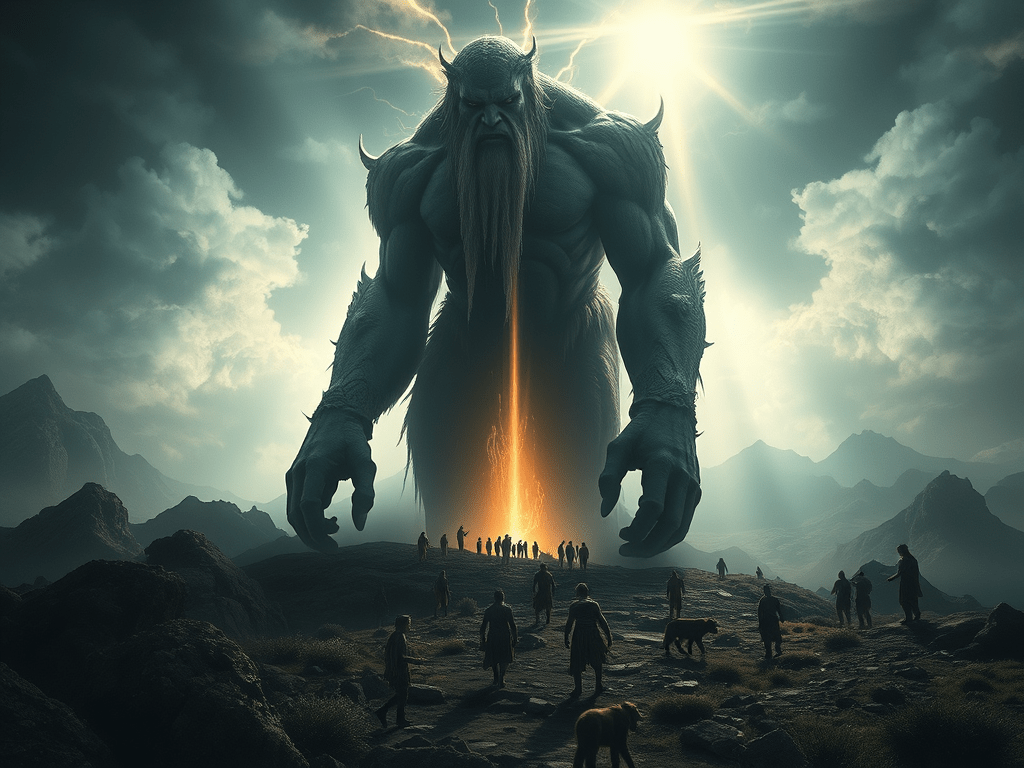
The Origins of the Nephilim: A Biblical and Cultural Exploration
The Nephilim—a mysterious and fascinating subject—have ignited debate for centuries. Rooted in Genesis 6:1–4, their origins invite speculation and study. This paper examines the biblical foundation, explores interpretive theories, and considers ancient parallels, culminating in a reflection on their significance within a holy God’s narrative.
Biblical Foundation
Genesis 6:1–4 (NIV) provides the primary account:
“When human beings began to increase in number on the earth and daughters were born to them, the sons of God saw that the daughters of humans were beautiful, and they married any of them they chose. Then the Lord said, ‘My Spirit will not contend with humans forever, for they are mortal; their days will be a hundred and twenty years.’ The Nephilim were on the earth in those days—and also afterward—when the sons of God went to the daughters of humans and had children by them. They were the heroes of old, men of renown.”
This perplexing passage precedes the flood narrative, leaving key questions unanswered: Who are the “sons of God”? What are the Nephilim? Clarity emerges only in context. Genesis 6:5–6 continues:
“Then the Lord saw that the wickedness of man was great in the earth, and that every intent of the thoughts of his heart was only evil continually. And the Lord was sorry that He had made man on the earth, and He was grieved in His heart.”
This suggests a rapid moral decline, despite righteous figures like Enosh, Enoch, and Noah, setting the stage for divine judgment.
Textual Analysis
The “sons of God” (bene ha’elohim) could denote:
- Godly Sethites: Descendants of Seth contrasting Cain’s wicked line.
- Royal Figures: Kings claiming divine status were common in ancient cultures.
- Rebellious Angels: Heavenly beings who abandoned their station to marry humans.
The angelic view, though interpretively challenging (e.g., Matthew 22:30 notes angels in heaven don’t marry), seems most likely. It underscores pre-flood evil, as God abhors interbreeding of unlike kinds—a violation of created order. “My Spirit” likely refers to the Holy Spirit, the life-breath of creation (Genesis 2:7), now withdrawing from a corrupt humanity. The resulting Nephilim—offspring of these unions—are described as giants, “mighty men of old,” ultimately destroyed by the flood.
Key Questions and Interpretations
The Nephilim’s origins hinge on the “sons of God” and the term “Nephilim.” Three main theories emerge:
1. Angelic Beings (Fallen Angels)
- Concept: The “sons of God” are rebellious angels who mated with women, producing hybrid Nephilim.
- Support:
- Bene ha’elohim refers to heavenly beings in Job 1:6 and 2:1.
- The Book of Enoch (2nd century BCE) describes “Watchers” who fathered giants 300 cubits tall (450 feet), wreaking havoc until the flood.
- Early Christian writers like Justin Martyr and Tertullian endorsed this view.
- Challenges:
- Matthew 22:30 questions angelic marriage, though it may not apply to fallen angels on Earth.
- Genesis 6 doesn’t explicitly call Nephilim giants, only “mighty men.”
2. Sethite Lineage (Human Godly Men)
- Concept: The “sons of God” are Seth’s righteous descendants, intermarrying with Cain’s wicked line, producing human Nephilim.
- Support:
- Offers a naturalistic reading, favored by Augustine as a moral decline.
- Challenges:
- Fails to explain the Nephilim’s unique might and renown.
- “Sons of God” isn’t linked to Seth elsewhere.
3. Royal/Divine Kings
- Concept: The “sons of God” are deified rulers, their offspring becoming legendary Nephilim.
- Support:
- Mesopotamian myths deify kings, aligning them with “sons of gods.”
- Challenges:
- Lacks explicit textual support and ancient Jewish traction.
The Name “Nephilim”
Derived from naphal (“to fall”), “Nephilim” may mean “fallen ones”—fallen angels, their offspring, or warriors who “fell upon” others. Some tie it to Aramaic naphiyla (“giants”), reflected in the Septuagint’s gigantes. Genesis emphasizes renown, not size, though Numbers 13:33 later associates them with giants.
Post-Flood Nephilim?
Genesis 6:4 notes their presence “in those days—and also afterward.” Numbers 13:33 states:
“There we saw the giants (the descendants of Anak came from the giants); and we were like grasshoppers in our own sight, and so we were in their sight.”
The same Hebrew term (Nephilim) appears, yet Anak’s ancestry isn’t traced pre-flood. Likely destroyed in the deluge, these may be a distinct group, named for size or reputation, not direct lineage.
Ancient Near Eastern Parallels
The Nephilim echo broader traditions:
- Mesopotamia: The Epic of Gilgamesh features a semi-divine giant-king; Sumerian lists cite godlike pre-flood rulers.
- Canaanite Myths: Ugaritic texts mention the Rephaim—mighty dead warriors—possibly akin to “men of renown.”
- Greek Mythology: Titans and demigods (e.g., Hercules) reflect divine-human hybrids, though later.
What Were They?
- Giants? Numbers 13 and Enoch’s symbolic 300-cubit claim suggest it, but Genesis focuses on might and fame.
- Supernatural? The angelic theory implies it, though textual ambiguity persists.
- Cultural Memory? They may reflect exaggerated tales of ancient leaders or tribes.
Reflection and Conclusion
The Nephilim’s origins remain elusive. The angelic theory, rooted in Enoch and Jewish tradition, frames them as a cosmic disruption necessitating the flood—a view I favor for its explanatory power. Human theories (Sethite or royal) offer earthly simplicity but falter on their exceptionalism. Whether towering giants or legendary figures, their story highlights a clash of divine and human realms.
This narrative underscores a deeper truth: God is holy—pure, perfect, and separate from sin. Sin grieves Him, separates us from Him, and demands judgment. Genesis teaches us to love God and hate sin, pursuing righteousness. In a wicked world, Noah found grace, counted righteously, and was spared. So too, amidst confusion and evil, we’re called to seek God’s purity in our generation.
Discover more from En-Joy Ministries
Subscribe to get the latest posts sent to your email.
