
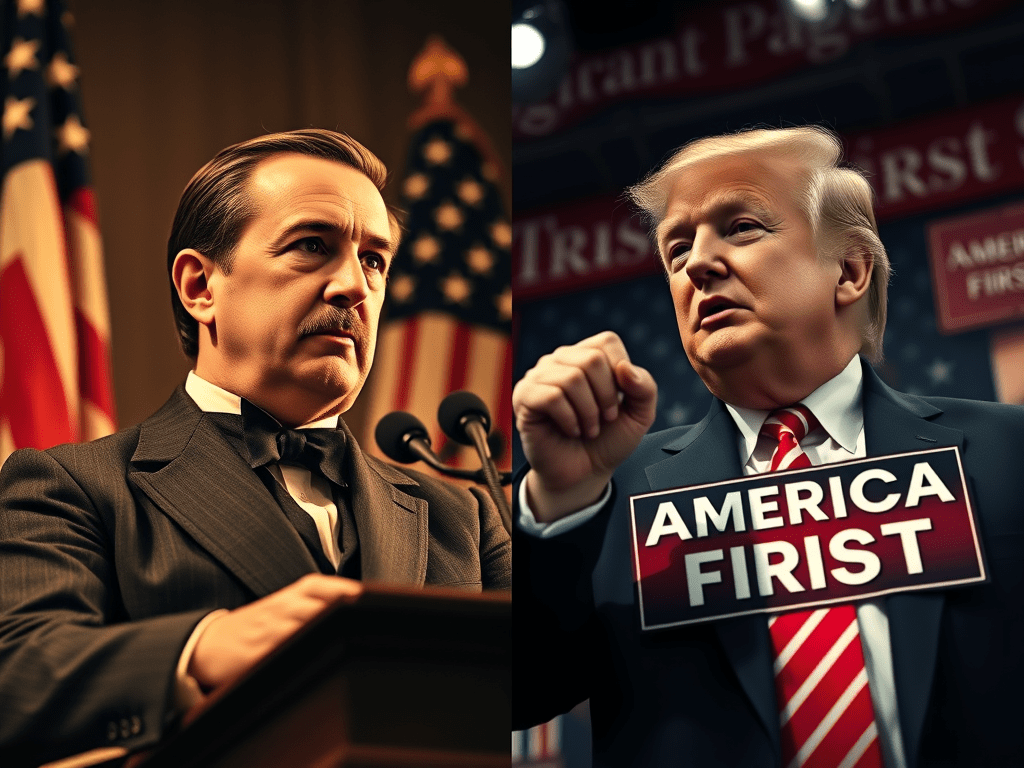
There are notable similarities in the policies and leadership styles of William McKinley and Donald Trump, despite the significant temporal and contextual differences between their presidencies. Here’s an exploration of some of these parallels:
Assassination Attempts: Both presidents faced assassination threats; McKinley was ultimately assassinated in 1901, while Trump survived two attempts on his life.
Economic Policies: McKinley championed protectionism through the Dingley Tariff Act of 1897, which raised tariffs to protect American industries. Similarly, Trump implemented protectionist measures, including tariffs on steel and aluminum, and renegotiated NAFTA into the USMCA, emphasizing “America First” economic policies.
Nationalism and American Exceptionalism: McKinley’s era was marked by American exceptionalism, especially during the Spanish-American War, which expanded U.S. territorial influence. Trump’s “America First” rhetoric similarly highlighted nationalism, focusing on border security, military strength, and economic self-reliance.
Immigration: McKinley’s administration saw the push for more restrictive immigration laws. Trump’s policies included travel bans from several Muslim-majority countries, stringent border control measures, and the “Remain in Mexico” policy, officially known as the Migrant Protection Protocols (MPP). This latter policy aimed to manage asylum seekers by requiring them to wait in Mexico during U.S. immigration court proceedings.
Foreign Policy: McKinley’s presidency transitioned the U.S. into an imperial power with the acquisition of territories after the Spanish-American War. Trump, on the other hand, adopted a transactional foreign policy, withdrawing from agreements like the Paris Climate Accord and the Iran nuclear deal. His interest in Greenland, suggesting its strategic importance for national security, along with comments on Canada potentially becoming the 51st state and revisiting U.S. control over the Panama Canal, showcased a form of modern territorial ambition.
Business Background: Both leaders came from business backgrounds, influencing their governance with a focus on economic prosperity and business-friendly policies.
A deeper analysis would reveal further similarities and differences, including their approaches to government spending, labor rights, and domestic policy. However, the historical contexts of their times — the industrial expansion of the early 20th century versus the globalized, digital 21st century — profoundly shaped the execution and reception of their policies. For a thorough comparison, one should delve into specific legislative actions, public speeches, and the socio-political environments of their respective eras. This would provide a more nuanced understanding of how these two leaders navigated their challenges and left their marks on American history.
Discover more from En-Joy Ministries
Subscribe to get the latest posts sent to your email.
